Dual-frequency RFID Label
Bridge the gap between consumer engagement and supply chain efficiency. Combine the tap-and-go convenience of HF with the long-range power of RAIN RFID (UHF) in a single label.
- Cold Chain & Temperature Monitoring
UHF & NFC Dual Frequency RFID Temperature Sensor Logger | Cold Chain Monitoring | -30°C to +50°C
- Dual-frequency RFID Label
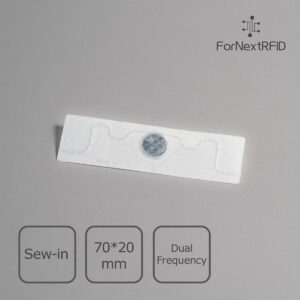
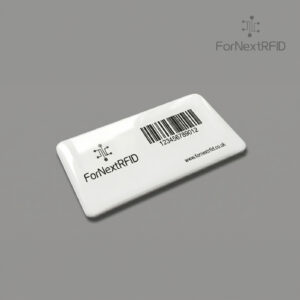
Dual-Frequency UHF + NFC Sew-In RFID Laundry Label 70×20mm
- Dual-frequency RFID Label
Dual-Frequency RFID Label HF + UHF | EM4423 | 53×33mm (Customizable)
- Dual-frequency RFID Label
Dual-Frequency RFID Label HF + UHF | EM4423 | 48×32mm (Customizable)
- Dual-frequency RFID Label
Dual-Frequency RFID Label 75×45mm | EM4423 | NFC + HF + UHF (3–5 m UHF Range)
- Dual Frequency Hard Tag
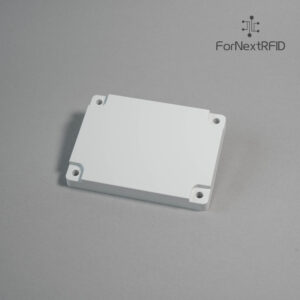
Dual-Frequency On-Metal RFID Tag | EM4425 | HF & UHF | 81*60mm
- Dual-frequency RFID Label
Dual Frequency On-Metal RFID Tag 105×30×7.5mm | ABS+PC | EM4423 UHF+HF

About Dual-frequency RFID Labels
One Item. Two Needs. One Solution.
Historically, businesses had to choose between High Frequency (HF/NFC) for close-range smartphone interaction and Ultra-High Frequency (UHF) for long-range inventory tracking.
Dual-Frequency RFID labels solve this challenge. They incorporate both interfaces into a single device. This allows you to perform bulk inventory counts from meters away while simultaneously enabling customers to tap the product with their phone for authentication or details.
Inside the Dual Chip: How It Works
These labels pack sophisticated technology into a standard form factor. Understanding the architecture helps unlock its potential..
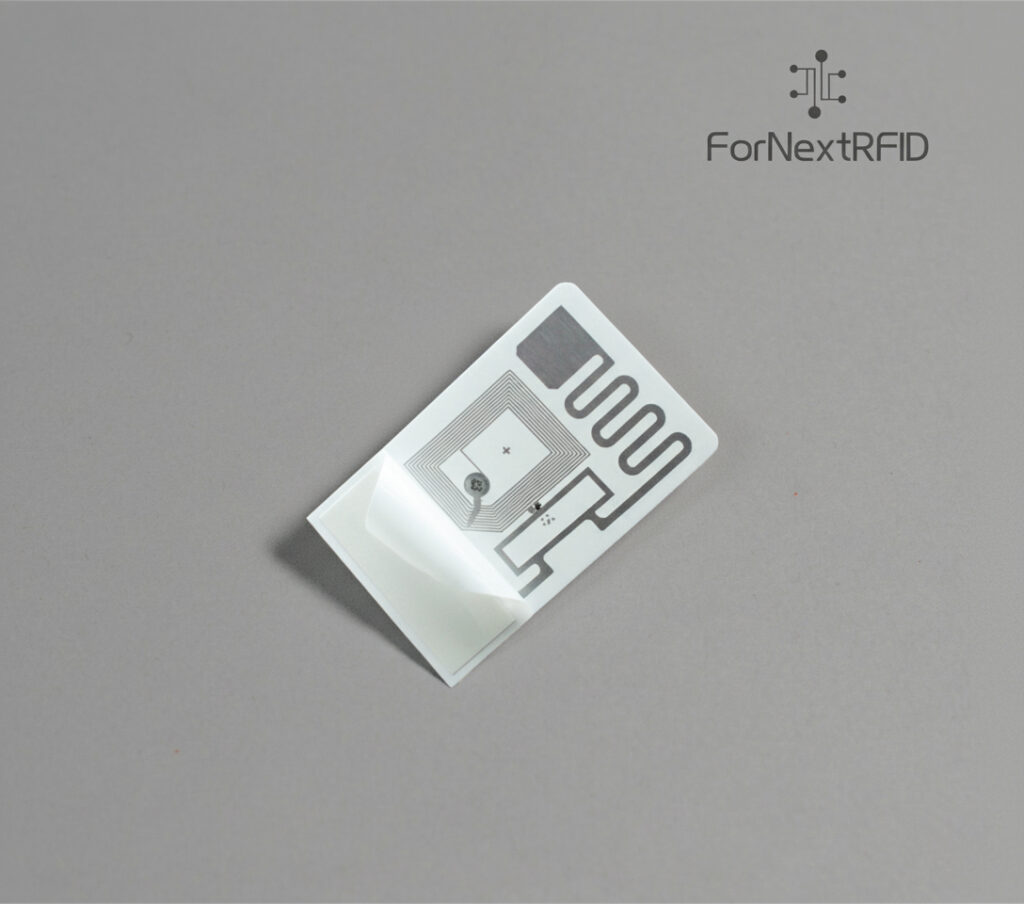
Single Chip, Dual Antenna
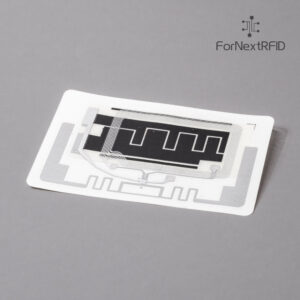
Typically uses one specialized IC wired to two antennas (a coil for HF and a dipole for UHF). This ensures a compact footprint suitable for standard label sizes.
Shared Memory
The "Magic" feature. Data written via the UHF interface (e.g., by a warehouse printer) is immediately readable via the NFC interface. No need to sync two databases.
Global Compliance
Fully compliant with ISO 14443/15693 (NFC) and EPC Gen2 / ISO 18000-63 (UHF). This ensures GS1 compatibility and works with standard hardware.
1
Range is not unified
Dual-Frequency does not mean NFC gets long range. HF still requires a tap (cm), and UHF still reads at meters.
3
Cost vs. Value
These tags cost roughly 10-30% more than single-frequency tags. However, they reduce labor and hardware costs significantly by removing the need for two separate tagging processes.
2
The "Metal" Factor
Standard labels do not work on metal surfaces. If your client needs to tag metal machinery, you must source specialized "On-Metal" Dual-Frequency tags (often thicker or flag-style).
Dual-Frequency RFID 101
Know Before You Deploy
Real-World Applications
Dual-frequency labels are transforming industries where both granular data and bulk visibility are required.
Retail & Luxury Goods
Typically uses one specialized IC wired to two antennas (a coil for HF and a dipole for UHF). This ensures a compact footprint suitable for standard label sizes.
- Anti-counterfeiting
- Digital Product Passport
Healthcare & Pharma
The "Magic" feature. Data written via the UHF interface (e.g., by a warehouse printer) is immediately readable via the NFC interface. No need to sync two databases.
- Inventory visibility
- Patient safety checks
Industrial Laundry
Fully compliant with ISO 14443/15693 (NFC) and EPC Gen2 / ISO 18000-63 (UHF). This ensures GS1 compatibility and works with standard hardware.
- Wash-cycle durability
- Automated sorting
Cold Chain Logistics
Fully compliant with ISO 14443/15693 (NFC) and EPC Gen2 / ISO 18000-63 (UHF). This ensures GS1 compatibility and works with standard hardware.
- Temperature monitoring
- Chain of custody
Frequently Asked Questions
It’s a single RFID tag designed to work on two frequencies (usually HF and UHF) at the same time. In one physical tag, you get both an HF/NFC chip and a UHF RFID capability, so it can be read by an NFC device (like a smartphone or HF reader) and by UHF RFID readers.
Yes. A dual-frequency tag can be read by standard UHF RFID readers (for its UHF side) and by standard HF/NFC readers (for its HF side). You don’t need a special reader to get started – you can use the same warehouse scanners for UHF reads, and any NFC-enabled device or reader for HF reads. To leverage both at once, some companies use dual-frequency readers, but it’s not required if you already have separate HF and UHF infrastructure.
Typically, yes. Most dual-frequency RFID chips have a shared memory or at least a linked ID, meaning the HF and UHF sides refer to the same item data. For example, you might encode an item’s ID or info once, and it’s retrievable whether you scan via UHF or tap via NFC. This ensures consistency – the tag presents the same core information to both an inventory system and a consumer’s smartphone. Some chips even synchronize additional data (like a digital authentication signature) across both interfaces for security.
Choose dual-frequency when you have use cases for both short-range and long-range RFID on the same item. If you only need warehouse tracking, a UHF-only tag might suffice. If you only need close-range reads (e.g. payment or access control), an HF/NFC-only tag could work. But if your product or asset will benefit from, say, supply chain visibility and customer interactivity (or any combination of HF and UHF tasks), a dual-frequency tag is the ideal solution. It streamlines tagging to one label and unlocks versatile functionality – from bulk scanning to smartphone tapping – without adding multiple tags to each item.

Speak to Our Team
If you have a specific requirement or need help choosing the right label format, our UK-based team is here to assist. Share your project details and we’ll guide you to the best option.