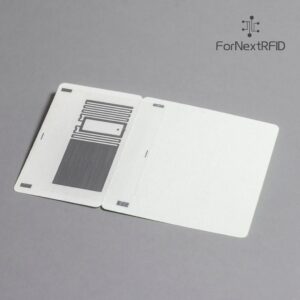
RFID Flag Label

A Flag RFID Label is a specially engineered label designed for metal surfaces, curved objects and liquid-filled containers.

RFID Flag Label on Metal and Liquid

What is a flag RFID label?

A flag RFID label is a label where only part of the label is stuck to the object, while the rest extends outward like a small flag. The RFID inlay (chip and antenna) is placed in this suspended “flag” section instead of being pressed flat against the product surface.
This prevents detuning and allows the antenna to operate at its intended frequency.
This structure has three key effects:

  • Suspended antenna design
  • Reduced interference from folding
  • More consistent RF environment

A simple mechanical lift delivers a significant RF performance gain.

Pain Points We Solve

Antenna Lifted Away from Interfering Materials Reliable Performance Without Premium Tag Cost Non-Contacting RF Orientation

Poor Read Performance on Metal Surfaces

Directly attaching standard RFID labels to metal surfaces severely degrades read range and consistency due to signal reflection and detuning.

Unstable Reads on Liquid-Filled Containers

Liquids absorb RF energy, causing traditional labels to fail when applied directly to bottles, tubes or container

Irregular or Curved Surfaces

Cylinders, cables, pipes and uneven assets make full-surface adhesion difficult, leading to inconsistent tag orientation and poor reads.

High Cost of Anti-Metal or Anti-Liquid Tags

Rigid on-metal or specialised anti-liquid tags often add unnecessary cost for applications that do not require extreme durability.

Use Cases

Cables, Pipes & Cylindrical Objects

Ideal for cables, hoses and pipes where a flat label cannot maintain proper antenna orientation.

Liquid Containers & Bottles

Used on chemical bottles, laboratory tubes, cosmetics and beverage containers to avoid signal absorption.

electronics, technology, devices, connection, digital, equipment, gadget, laptop, phone, tablet
IT & Industrial Equipment

Common in data centres, factories and maintenance environments for cost-effective asset tracking.

Frequently Asked Questions

No. A flag label avoids metal interference by lifting the antenna away from the surface, whereas on-metal tags use specialised materials to operate directly on metal.

Yes. By separating the antenna from the liquid surface, flag labels significantly improve read reliability compared to standard adhesive labels.

For many applications, flag labels provide sufficient and stable read range at a much lower cost. On-metal tags are typically reserved for harsh or long-range environments.

No. We use library-grade permanent adhesive designed for years of circulation.

They are generally designed for single-use or semi-permanent applications, depending on adhesive type and handling conditions.

Sample packs can be arranged quickly, with UK-based support for communication and delivery.

Speak to Our Team

Tell us your asset type and environment — we’ll advise whether a flag label or an on-metal tag is the right fit.

Name
Scroll to Top