

What Is a Flag RFID Label and Why It Matters for Metal and Liquid Assets
In many RFID projects, the most challenging items to tag are those made of metal, filled with liquid or shaped with curved, irregular surfaces. Standard UHF RFID labels are usually designed for flat, non-metallic packaging. Once they are applied directly onto metal containers, liquid bottles or tight curves, read performance can drop sharply.
Flag RFID labels are specifically designed to solve this problem. By lifting the antenna away from the surface, they deliver more stable, longer-range reading in environments where conventional labels often fail.

Why standard RFID labels struggle on metal and liquids
Traditional RFID labels are fully adhered to the object. On paper cartons or plastic totes this works well, but on more complex items it creates several issues:
- Metal surfaces reflect and detune RF signals, reducing read range.
- Liquids inside bottles or containers absorb RF energy.
- Curved or irregular shapes can force the label to bend or even fold the antenna.
In practice, this can lead to:
- Read distance dropping from metres to a few centimetres
- Unstable performance – tags read in one position, but not in another
- “Blind spots” in automated reading tunnels, conveyors or gate systems
For operations that need reliable, real-time visibility of assets and inventory, this instability is a major risk.
What is a flag RFID label?
A flag RFID label is a label where only part of the label is stuck to the object, while the rest extends outward like a small flag. The RFID inlay (chip and antenna) is placed in this suspended “flag” section instead of being pressed flat against the product surface.
This structure has three key effects:
- Suspended antenna design
The antenna is physically lifted away from metal or liquid surfaces, reducing detuning and absorption. - Reduced interference from folding
Because the inlay sits in the free-standing part of the label, it is less likely to be bent or folded when applied to curved items. - More consistent RF environment
The small air gap around the antenna helps maintain a more predictable RF behaviour, improving read stability.
In other words: a flag RFID label uses simple mechanical design to fix a RF problem.
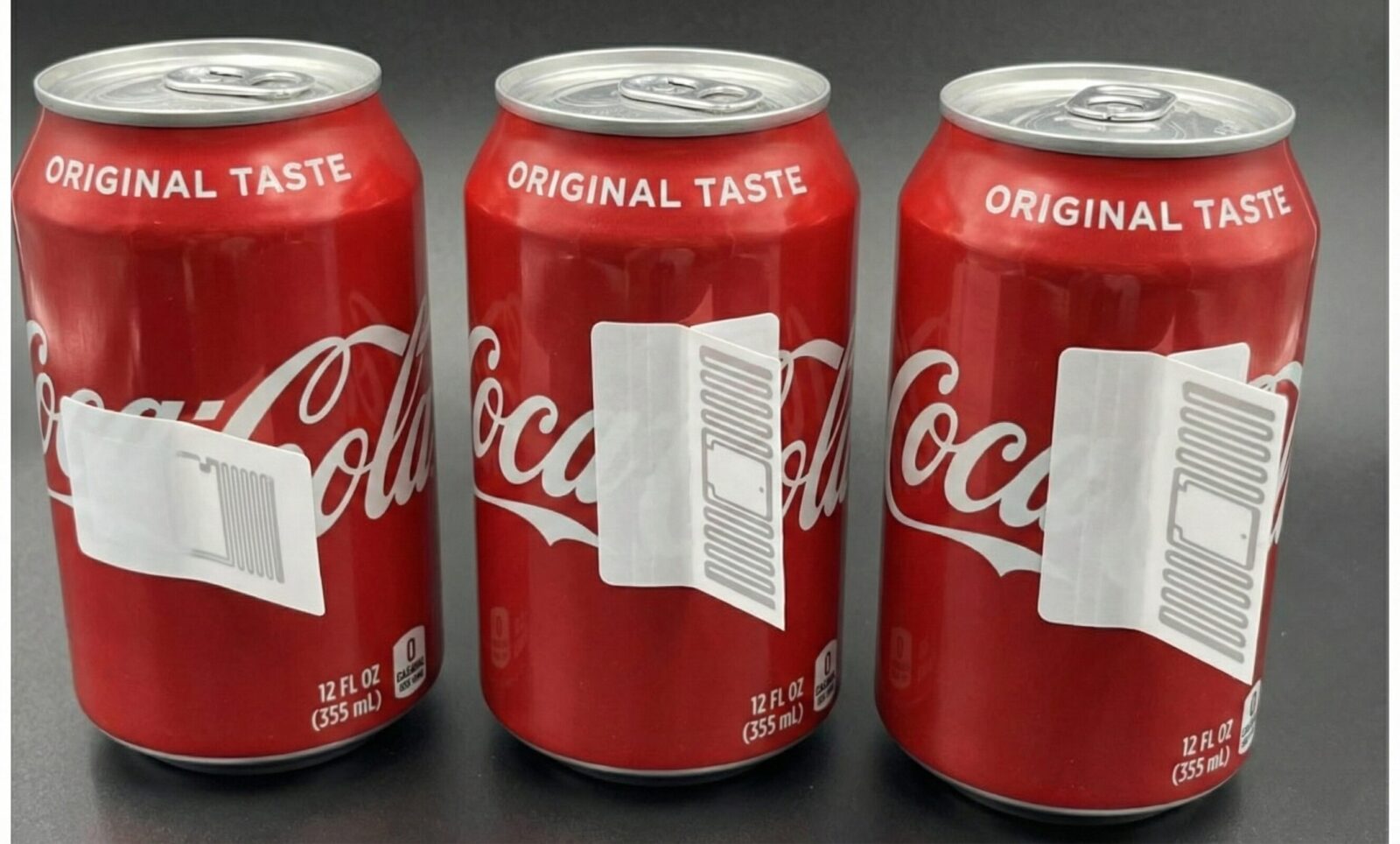
Real-world performance: flag vs standard RFID labels
Practical tests show how big this difference can be.
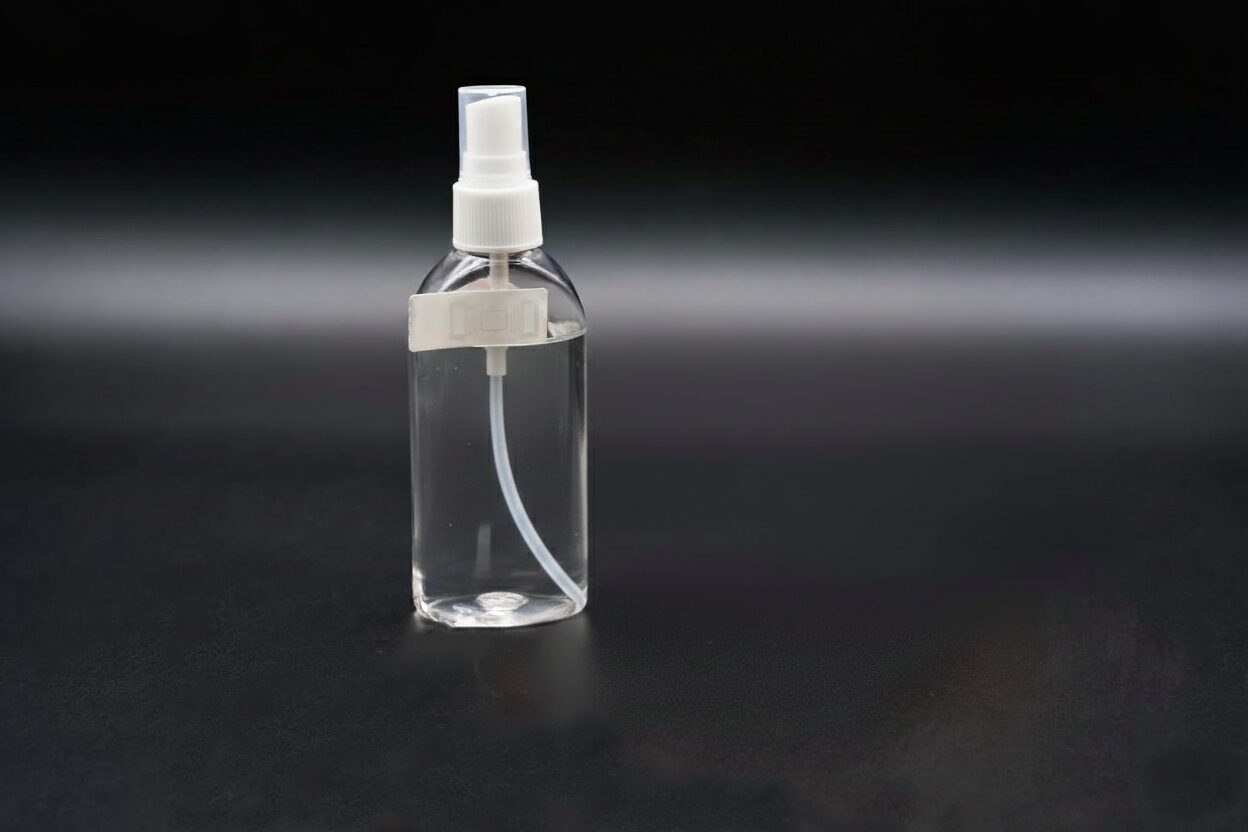
Take a typical scenario that combines metal and liquids – for example, a bottle or container placed near metal structures:
- A standard RFID label is attached directly to the surface. As the reader is moved away, the tag can usually only be read up to around 20 cm, and the read often drops out at certain angles.
- A flag RFID label is applied to the same type of item, with the inlay suspended away from the surface. In this case, the same reader can still detect the tag reliably at distances of around 4 metres, with faster, more stable responses.
Exact distances will vary by chip, reader power and environment, but the pattern is consistent:
flag RFID labels deliver significantly better read range and success rate than flat labels in metal/liquid scenarios.
Typical use cases for flag RFID labels
Because of these characteristics, flag RFID labels are widely used across multiple sectors, including:
- Supply chain and logistics
- Mixed pallets containing metal cans, liquid products and irregular packaging
- Metal racks, trolleys and cages where standard labels perform poorly
- Unmanned and smart retail
- Canned drinks, bottled liquids and cosmetics
- Items displayed on metal shelves or fixtures
- Industrial and manufacturing environments
- Metal components, tools and WIP items with curved or uneven shapes
- Containers and bins that hold liquids, gels or chemicals
- Healthcare and laboratories
- Metal devices or instruments
- Glass reagent or sample bottles
In many of these applications, a full on-metal hard tag may be too bulky or expensive. Flag RFID labels offer a lighter, more flexible and cost-effective alternative.
Best practices for using flag RFID labels
To get reliable performance from flag RFID labels in any of these scenarios:
- Keep the flag section free and flat
Ensure the part of the label containing the inlay is not crushed, sharply bent or twisted. - Position the flag carefully
Place the adhered part where there is enough clearance for the flag to stand off the surface, especially near metal edges. - Protect against mechanical damage
In high-contact areas (e.g. conveyor edges or tight storage), consider label guards or positioning the flag in a slightly recessed area. - Store labels correctly
Keep unused label rolls in a dry, moderate environment to protect the inlay and adhesive before printing and encoding.
With the right design and application, flag RFID labels can greatly improve read range and stability on difficult items, helping integrators and end users deliver more robust RFID systems on metal, liquid and irregular assets.
For project-specific guidance or custom flag label options, you can explore: RFID Flag Label

