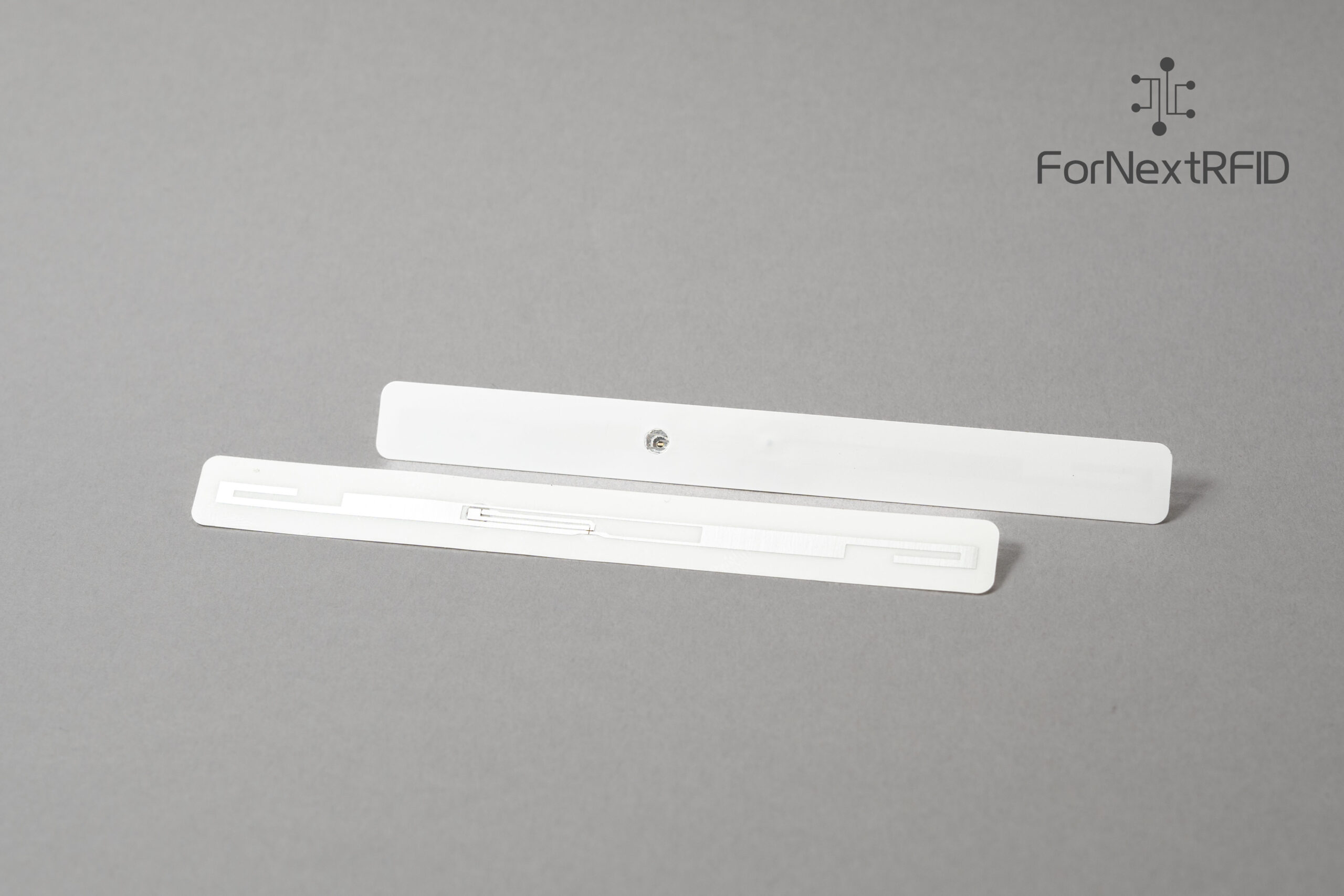

In many organisations, RFID has already become a familiar technology for identification and inventory. Files, samples, cartons, cables and assets can all carry a small UHF tag, allowing systems to read large numbers of items quickly and keep digital records up to date. However, even with RFID in place, one practical question often remains: when the system tells you that an item is present, how do you quickly find the exact physical object in front of you?
LED RFID labels are designed to address precisely this gap. By adding a small LED light to a traditional RFID label, they make it possible not only to know that an item is there, but also to see exactly which one it is. When a particular asset, file, sample or cable needs to be located, the system can command the corresponding LED RFID label to light up, guiding staff directly to the correct item in seconds.
what is LED RFID Label
An LED RFID label, sometimes called a light-indicating RFID label or LED RFID tag, is essentially a passive UHF RFID tag with an integrated light source. The core RFID part is the same as a conventional UHF label: an antenna and chip that store an EPC and other data, operating to EPC Gen2 / ISO 18000-6C standards in the UHF band. On top of this, the label includes a tiny LED that can be activated by specific commands from a compatible reader and system.
In normal operation, an LED RFID label behaves just like a standard RFID tag. It can be read in bulk, used for fast inventory, linked to database records and written with additional information if required. The difference appears when a user needs to identify a particular item among many. At that moment, the software can select the relevant EPC and instruct that specific tag to light up or flash. On a shelf of almost identical folders, in a tray of similar samples, or inside a cabinet filled with cables, the one that matters becomes immediately visible.
The form factor of LED RFID labels is quite flexible. They can appear as thin adhesive labels on the spine of a folder or on the side of a carton, as long, slim strips along a shelf edge, as flexible on-metal labels fixed to instruments or metal equipment, as cable tags or cable ties wrapped around individual lines, or as card-type light-up tags suitable for key management and special access applications. In all cases, they remain passive: there is no battery to maintain, which keeps maintenance low and makes deployment closer to that of conventional RFID.
Why LED RFID labels are used
Traditional RFID labels already bring strong benefits. They allow rapid counting of items, track borrow and return processes, support permission management and provide a reliable digital audit trail. Yet in real operations there are many situations where knowing “this item is somewhere in this room or on this rack” is not enough. Staff need to find the exact folder, the specific test tube rack, the one faulty cable or the single asset that requires attention.
This is where LED RFID labels add value. They introduce what you can think of as a “visual address” for each tagged object. Instead of scanning multiple labels one by one to confirm which is which, users simply ask the system to highlight the target. The corresponding label lights up and the item can be removed, inspected or moved immediately.
The result is a combination of speed and precision. Inventory and reconciliation still benefit from bulk RFID reading, but locating becomes faster and more accurate. Search time falls sharply, especially in dense storage. At the same time, the risk of human error decreases because staff no longer have to guess based on handwriting, small barcodes or similar appearance. They simply follow the light.
LED RFID labels also make work easier in environments that are either visually crowded or physically demanding. In low-light archives, high-bay warehouses or noisy technical rooms, it can be difficult to rely purely on screen prompts or paper lists. A flashing LED directly on the item is clear, intuitive and hard to miss. For new staff, it shortens training time and makes complex locations, such as data centres or large archive rooms, more manageable.
Archive and file management
Archive and file management is one of the most natural application areas for LED RFID labels. Many organisations in government, finance, healthcare and engineering already use UHF RFID for their archives. Standard RFID labels on folders and boxes allow quick inventory, faster borrowing and return processes, and better permission control. Yet even with this in place, finding a specific file on a long shelf of similar folders can still be slow and frustrating.
By using LED RFID labels for file spines or archive boxes, the last piece of the puzzle can be solved. Each folder carries a unique RFID ID that corresponds to a record in the archive system. When a user searches for a particular file, the system not only confirms that it is present, but can also command the corresponding label to light up. In a dense cabinet, the one folder with a lit LED stands out immediately. The user can take the file, process it, and then return it to the correct place, again supported by RFID for recording the transaction.
This combination of fast inventory and visual locating is especially valuable where archives are large, access is shared between multiple departments, and the cost of misplacing or exposing the wrong file is high.
Sample and specimen management in medical, research and production environments
Another strong use case for LED RFID labels lies in sample and specimen management. In hospitals, laboratories and R&D facilities, there are often many small items to control: test tubes, vials, experimental samples, intermediate products and quality control specimens. It is not unusual to see racks and boxes filled with dozens or hundreds of similar containers, often stored in fridges, freezers or controlled environments.
Conventional UHF RFID has already proved valuable here by enabling rapid counts, tracking movements between departments, and ensuring that only authorised users handle certain samples. UHF LED RFID labels extend this by making it easier to find a specific sample or group of samples without disrupting the whole storage system.
Imagine a tray of test tubes in a rack. Each rack can carry an LED RFID label, and in some designs individual sets of tubes or holders can also be tagged. When a clinician or researcher needs a certain sample ID, the system identifies which rack it is in and lights up the relevant tag. Instead of reading small labels on each tube or removing racks one by one, staff can walk directly to the highlighted position. For time-sensitive or safety-critical samples, this can make a real difference to handling quality and efficiency.
Cable management and technical rooms
Cables are a classic headache in IT, telecoms and industrial environments. After years of additions and changes, many cabinets end up with bundles of cables that look almost identical. Tracing a particular line, especially during a fault or upgrade, can be slow and risky. A mistake can bring down the wrong service or cause an unexpected outage.
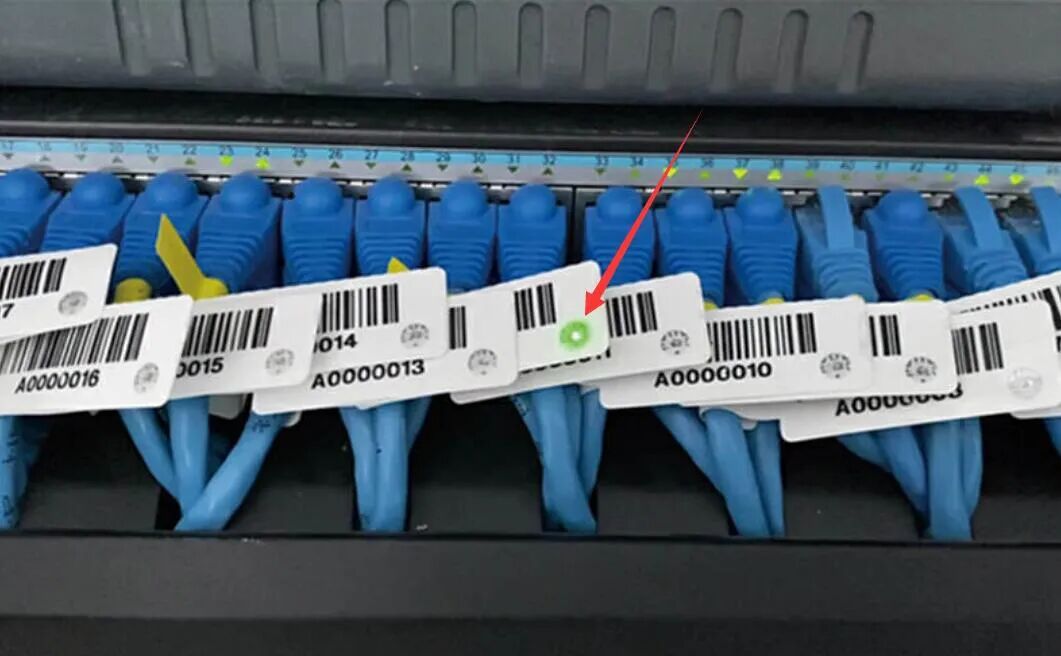
LED RFID cable labels or LED RFID cable ties are designed with this problem in mind. Each cable is tagged and linked to a unique record in the cable management or network documentation system. The tag can still carry printed information and barcodes, so technicians can read it visually if needed. But the real benefit comes when a particular cable must be located urgently. When monitoring tools detect an issue on a specific line, the system can identify which cable corresponds to that line ID and trigger the LED on its tag. In a cabinet full of similar cables, the one that is lit becomes obvious.
This approach supports fast, accurate work during fault resolution, re-patching and periodic inspections. It reduces the likelihood of disconnection errors and gives network and infrastructure teams more confidence when working in dense or critical cable installations.
Warehouse and logistics operations
In warehouses and logistics centres, RFID is often used to track pallets, cartons and totes. LED RFID labels take this further by enabling guided “pick-to-light” and “search-to-light” processes without changing the fundamental RFID infrastructure.
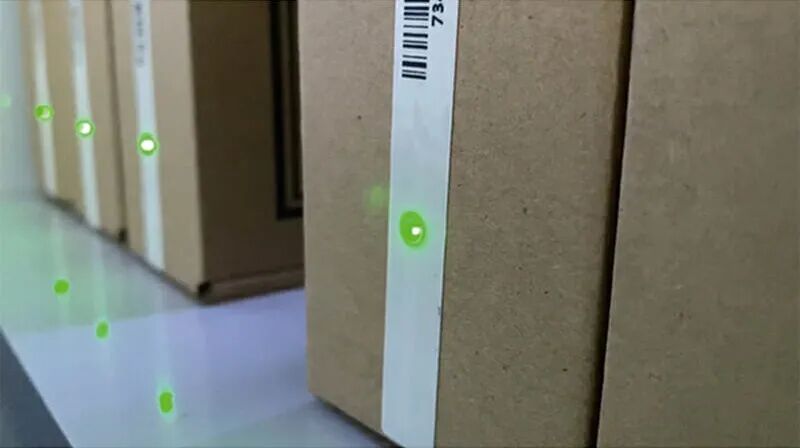
Cartons, trays or storage locations are fitted with LED-enabled labels. When an order must be picked or a specific item needs to be found, the warehouse management system identifies the relevant units and instructs their labels to light up. Operators walking through the aisles can immediately see which cartons or locations are involved, even if the packaging looks identical. This is particularly helpful for SKUs that differ only in size, colour or version.
The same principle applies to exception handling. When a count shows a discrepancy, the system can highlight the items that need to be moved, checked or separated, instead of forcing staff to manually search through a large group. The result is faster, more accurate picking and replenishment, smoother handling of exceptions, and more efficient use of existing RFID infrastructure.
Asset management, on-metal equipment and keys
LED RFID labels also play an important role in asset management. Many organisations use UHF RFID for tools, instruments and equipment, especially where items move between departments or must be regularly calibrated and inspected. Passive RFID tags allow quick stocktaking and accurate recording of movements. However, when an engineer needs a specific instrument from a cabinet or trolley full of similar items, the same locating challenge appears again.
By using UHF LED RFID labels, including anti-metal versions designed for metal instruments and equipment, the system can guide the user directly to the correct asset. During an audit, assets requiring verification can light up one by one. When a particular device is due for calibration or recall, its label can be activated to make it easy to distinguish from others. This improves both operational efficiency and compliance.
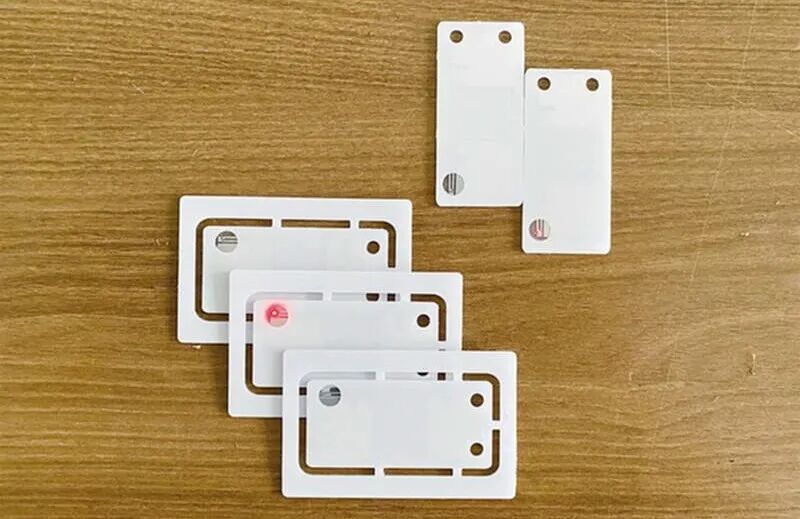
A related scenario is key management. In large facilities, hotels, hospitals or industrial sites, key boards and boxes can quickly become crowded. Card-type LED RFID tags or light-up key tags allow each key or key bunch to be tracked via RFID and located visually when needed. When a user with the right permission requests a key, the management system can light up the corresponding tag. The correct key is found quickly, and the issue and return are recorded automatically.
Implementing LED RFID labels in real projects
For system integrators and technical managers, LED RFID labels are not a completely new technology stack; they are an extension to existing UHF RFID systems. The main considerations lie in ensuring that readers and software can support the LED control commands, and that label selection matches the physical environment.
Reader firmware and middleware need to be able to address individual tags and send the appropriate light-up instructions. Encoding schemes should be designed so that every LED RFID label is unambiguously linked to a file number, sample ID, cable ID, asset code or key reference. In parallel, care is required when choosing the physical label: off-metal or on-metal versions, cable tags or ties for wiring, small card-type formats for keys, and robust materials for industrial and warehouse settings.
Pilot deployments are usually the best way to refine these choices. A short trial in a real archive room, laboratory, cable cabinet or warehouse zone quickly reveals how visible the LEDs are, how read ranges behave, and how staff interact with the new workflows. Based on those findings, integrators can adjust label positions, reader placement and software logic before rolling out at scale.
Where ForNext’s LED RFID labels fit
ForNext RFID offers LED RFID labels as part of a broader portfolio of UHF RFID products tailored to UK and European customers. The LED range includes compact labels for logistics and warehouse applications, slim formats suitable for file spines and shelf edges, flexible on-metal LED labels for instruments and equipment, and designs that can be adapted to cable tagging and card-type applications such as key management.
All of these share the same principle: on the basis of proven UHF RFID technology, they add a light-up function so that items can be not only read quickly, but also located at a glance. In archives, laboratories, data centres, warehouses and asset rooms, this transforms processes from simple identification to fast, precise and visual control of the physical world.